Starting solid foods is one of the most exciting stages of the first year. After months of milk feeds, your baby is ready to explore new tastes, textures, and smells. It is also a stage that brings plenty of questions. How do you know the right time to begin, and what signs should you look for? Starting too early can make feeding harder, while waiting too long can delay the practice your baby needs to learn how to eat.
Most babies show clear signs of readiness around six months of age, though every baby develops at their own pace. The signs are about physical development, not just age or appetite. A baby who can sit with support, hold their head steady, and show interest in what others are eating is giving you useful information. This guide explains each sign in detail so you can feel confident about when to begin.
Why Age Alone Does Not Tell the Whole Story
Many parents are told to start solids at six months, and for most babies this is a good guide. But age is only one part of readiness. A baby born early, for example, may need extra time to reach the same milestones as a baby born at full term. A baby who is six months old but cannot yet sit with support or hold their head up steadily is not ready, even though the calendar says it is time.
Starting solids is about safety as much as nutrition. A baby needs enough trunk and head control to sit upright, swallow safely, and turn away when they have had enough. Without these skills, food is more likely to be pushed out of the mouth or to cause gagging and distress. Waiting for the physical signs protects your baby and makes the first meals a calmer experience for everyone.
Milk remains the main source of nutrition during the first year, even after solids begin. The first foods are about learning and exploration, not about replacing milk feeds. This takes the pressure off the early weeks. Your baby does not need to eat a large amount, and a few small tastes each day are a fine start while their skills grow.
Sitting Up and Holding the Head Steady
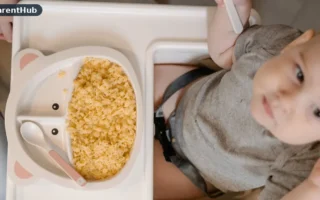
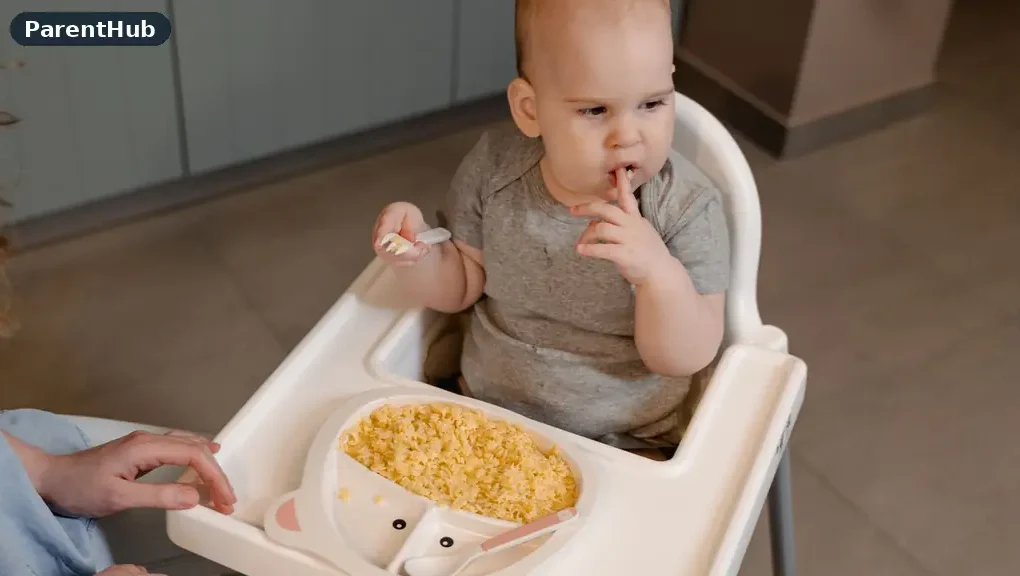
The most important sign of readiness is the ability to sit with little or no support. Your baby should be able to sit in a high chair or on your lap with their back mostly straight and their head steady. This control allows them to lean forward toward food, swallow safely, and turn their head away when they are full. A baby who slumps to one side or whose head keeps tipping forward is not ready yet.
Head control develops gradually over the first months. By the time solids begin, your baby should be able to hold their head upright without wobbling and move it from side to side. This matters because a steady head position keeps the airway open and helps the tongue and jaw work together to move food to the back of the mouth for swallowing.
- Sits in a high chair with back mostly straight
- Holds the head steady without wobbling
- Can lean forward toward food and turn away when full
- Stays upright for the length of a short meal
If your baby is close to sitting but not quite there, give it a little more time. A week or two of practice, with plenty of floor time and supported sitting, often makes the difference. There is no rush, and starting when the body is ready makes the whole process easier and safer for your baby.
The Tongue Thrust Reflex Has Faded
Young babies have a reflex that pushes the tongue forward whenever something touches their lips. This tongue thrust reflex protects a baby from choking on objects before they can swallow safely, but it also makes eating solids very difficult. Food placed on the tongue is pushed straight back out of the mouth. Most babies lose this reflex between four and six months of age.
You can test for this reflex at home with a small, clean spoon. Touch the spoon gently to your baby lower lip. If the tongue pushes forward and out of the mouth, the reflex is still strong. If the tongue stays back or moves in a way that pulls the spoon in, the reflex has faded and your baby is closer to being ready for food.
Parents often mistake tongue thrust for a baby rejecting food. The body is simply not ready yet. Waiting a week and trying again is usually all it takes, and it avoids turning mealtimes into a struggle that neither parent nor baby enjoys.
Showing Interest in Food and Mealtimes
A baby who is ready for solids often shows clear interest in what the rest of the family is eating. They may watch you eat with focused attention, reach for your plate or cup, open their mouth when food comes near, or make chewing movements while you eat. These behaviours are a good sign that your baby is curious about food and ready to try it.
Interest alone is not enough, and it should be combined with the physical signs of readiness. Babies are naturally curious and will reach for almost anything, including objects that are not food. But when interest appears alongside good head control, sitting ability, and a fading tongue thrust reflex, it is a strong signal that the time has come to offer the first tastes.
- Watches family members eat with focused attention
- Reaches for food, plates, or cups at the table
- Opens the mouth when a spoon comes near
- Makes chewing or smacking movements during meals
Letting your baby join family mealtimes, even before they start solids, helps build this interest. Sitting your baby at the table in a high chair while you eat shows them how eating works and gives them a chance to watch, listen, and learn. Many babies become much more willing to try food once they have spent time watching others enjoy it.
Grasping Objects and Bringing Them to the Mouth
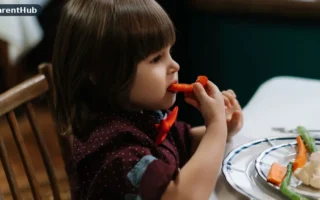
The ability to pick up objects and bring them to the mouth is another key sign of readiness. This skill shows that the hand-to-mouth coordination needed for eating is developing. A baby who can grasp a toy, a teether, or a piece of soft food and guide it to their mouth is practising the same movements they will use at mealtimes.
This skill also matters for babies who will try baby led weaning, where the baby feeds themselves with soft finger foods from the start. Good grasping and hand-to-mouth control reduce frustration and help the baby explore food at their own pace. Even for spoon-fed babies, the ability to hold a spoon or a piece of food builds confidence and independence.
Give your baby safe objects to practise with, such as teethers, soft toys, and large pieces of food later on. Floor play, tummy time, and reaching games all help build the coordination that feeding needs. If your baby can pick up a small toy and bring it to their mouth without help, they are well on the way to being ready for solids.
Starting Solids With Confidence When the Signs Are There
When the signs of readiness are all present, starting solids can be a relaxed and happy experience. Begin with one small meal a day, offered when your baby is alert and calm, not too hungry and not too tired. Offer a small amount of smooth, single-ingredient food and let your baby set the pace. For a step by step guide to those first meals, see our article on how to introduce solid foods, and for ideas on what to serve first, our list of best first foods for your baby is a helpful next read. Trust the signs, keep mealtimes calm, and enjoy watching your baby discover food.
What age do most babies start solid foods?
Most babies show signs of readiness around six months of age. The exact timing depends on physical development, not just age. Look for sitting with support, steady head control, a fading tongue thrust reflex, and interest in food before starting.
What is the tongue thrust reflex in babies?
The tongue thrust reflex pushes the tongue forward when something touches a baby lips. It protects young babies from choking but makes eating solids difficult. Most babies lose this reflex between four and six months, which is one of the signs they are ready for food.
Does a baby need to sit up before starting solids?
Yes, your baby should be able to sit with little or no support and hold their head steady. This control helps them swallow safely and turn away when full. A baby who slumps or whose head tips forward is not ready yet and needs more time.
How do I know if a baby is interested in food?
A ready baby may watch you eat, reach for your plate or cup, open their mouth when a spoon comes near, or make chewing movements. Interest alone is not enough, so check it alongside sitting ability, head control, and a fading tongue thrust reflex.