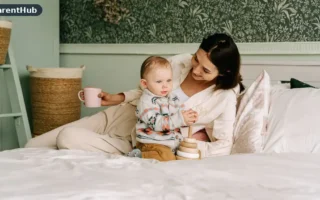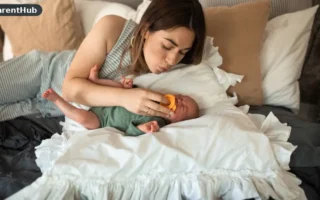
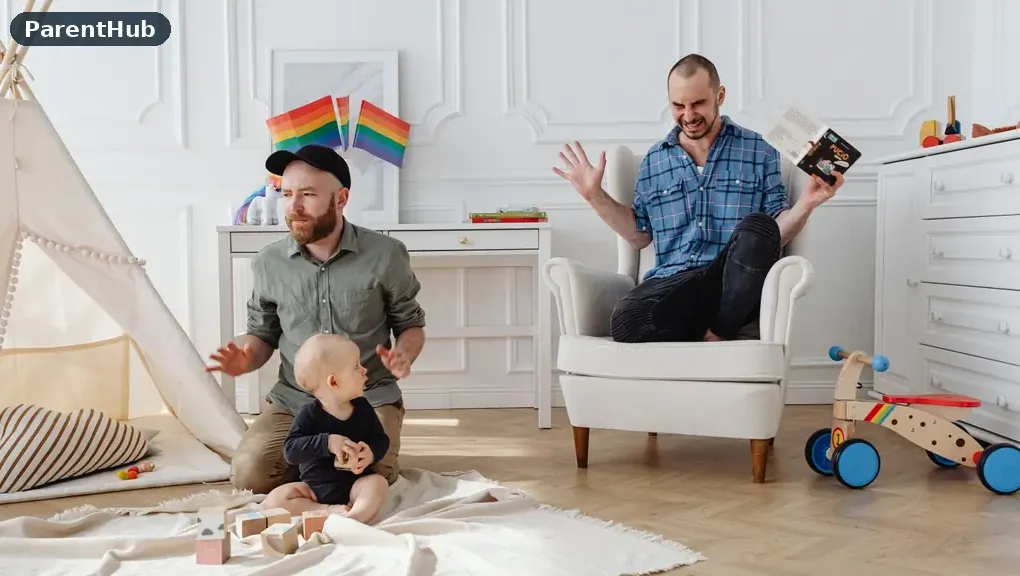
Play is how babies learn about the world, and it starts long before a baby can hold a toy or say a word. A newborn learns from a face, a voice, and a gentle touch, while an older baby learns by reaching, dropping, stacking, and exploring. Parents do not need expensive toys or a strict plan, because simple and repeated play, done with warmth and attention, supports development at every stage.
The best play matches the age and interests of the baby, and it changes as new skills appear. Short and frequent sessions work better than long ones, because babies tire quickly and lose interest. Watching the baby cues, such as smiling, turning away, or rubbing the eyes, helps parents know when to play and when to rest.
Play With a Newborn From Birth to Three Months
In the first three months, a baby sees best at a short distance, about the length of an adult forearm, and responds most to faces and voices. Talking, singing, and making gentle expressions during nappy changes and feeds are all forms of play. A high contrast black and white card, a soft rattle, or a mobile above the crib can hold attention for a short time.
Tummy time is also play at this age, and it builds neck and shoulder strength. Start with a minute or two, several times a day, on a clean mat or on a parent chest. If the baby fusses, try a shorter session, a mirror, or a toy placed just within view. The tummy time guide for healthy development explains how to build up the time gradually.
Gentle movement games, such as slow rocking, a soft bounce on the knee, or a simple peekaboo with hands, help a newborn learn about cause and effect. Keep the voice soft, the movements slow, and the session short, and stop if the baby turns away or starts to cry. A calm and happy baby learns more than an overstimulated one.
- Talk and sing during care routines
- Use high contrast cards and soft rattles
- Try short tummy time sessions daily
- Play gentle peekaboo with hands
- Watch for signs of tiredness
Play With a Baby From Four to Six Months
Between four and six months, babies start to reach, grasp, and bring objects to the mouth, so play becomes more hands on. Soft blocks, textured balls, board books, and safe household objects such as a wooden spoon can all be explored. Offer one toy at a time, and let the baby choose how to hold, shake, or mouth it.
Sound games become popular at this age. Shaking a rattle, tapping a drum, or singing a song with actions can make a baby laugh and copy the movements. Repeating the same song or game helps the baby learn to expect what comes next, which builds memory and language skills.
Sitting with support opens up new play, because the baby can see more and reach further. Place toys in a small arc on the floor, and encourage reaching from side to side. A baby gym, a play mat, or a simple blanket on the floor gives a safe space to practise rolling and reaching.
Water play in a shallow tray, with cups and spoons, is a favourite at this age, and it teaches pouring, splashing, and cause and effect. Always supervise water play closely, even with a very small amount of water, and keep the session short. A towel nearby makes clean up easy, and the baby can enjoy the sensory play without getting cold.
Play With a Baby From Seven to Twelve Months
From seven to twelve months, babies crawl, pull up, and start to explore the house, so play becomes more active. Stacking cups, nesting bowls, a simple shape sorter, and a ball to roll back and forth all support hand eye coordination. Hiding a toy under a cloth and letting the baby find it teaches object permanence, the idea that things exist even when they cannot be seen.
Simple pretend play also begins, such as holding a toy phone to the ear or stirring a pot with a spoon. Copying the baby sounds and actions, and naming objects during play, helps language grow. The baby milestones guide by month shows what skills usually appear at each age, and how play supports them.
- Offer stacking cups and nesting bowls
- Roll a ball back and forth together
- Hide toys under a cloth to find
- Name objects and copy baby sounds
- Give safe space to crawl and explore
Sorting games, such as putting coloured blocks into matching boxes or sorting animals into groups, help toddlers learn about colours, shapes, and categories. Keep the game simple, with only two or three groups at first, and praise the effort rather than the result. A toddler who feels proud of trying will want to play again and learn more.
Play With a Toddler From One to Two Years
Toddlers love to move, climb, push, and carry, so active play is important. A low climbing frame, a push along toy, a tunnel, or a simple obstacle course made from cushions can keep a toddler busy and build balance. Outdoor play in a park or garden adds fresh air, new textures, and space to run.
Pretend play grows quickly at this age. A toy kitchen, a doll, a set of animal figures, or a box that becomes a car can spark imagination. Join in the game, follow the toddler lead, and add simple words to describe what is happening. Reading picture books together, pointing at images, and asking simple questions also builds vocabulary.
Messy play, such as water play, sand, play dough, or finger painting, helps toddlers learn about texture and cause and effect. Use an apron, a tray, and a washable surface, and keep sessions short. Supervision is important, because small parts and messy materials can be a choking risk or a mess to clean up.
Outdoor play adds new sounds, smells, and textures that indoor play cannot offer, from grass and leaves to sand and water. A short walk in a park, a visit to a playground, or time in a garden gives a baby fresh air and space to move. Dress the baby for the weather, use sun protection when needed, and let the baby explore safely with close supervision.
Choosing Safe Toys and a Simple Play Space
Safe toys are large enough not to be a choking risk, made from non toxic materials, and free from sharp edges or loose parts. Check toys regularly for damage, and follow the age guidance on the packaging. Fewer toys, rotated every week or two, often hold attention better than a large pile of toys all at once.
A simple play space on the floor, with a mat, a low shelf, and a basket of toys, invites a baby to explore safely. Keep the area clean, remove small objects, and cover sockets and sharp corners. A calm and tidy space helps a baby focus, and it makes clean up easier at the end of the day.
Parents do not need to buy a new toy for every stage. Many household items, such as pots, lids, boxes, and scarves, make excellent playthings when they are clean and safe. The value of play comes from the interaction, the talk, and the shared attention, not from the price of the toy.
Making Everyday Play a Habit That Grows With Your Baby
Play does not need a special time or a special room, because it can happen during a nappy change, a walk, a bath, or a meal. Short moments of talking, singing, reading, and exploring add up across the day, and they build language, movement, thinking, and bonding. By matching play to the age of the baby, keeping it simple and safe, and following the baby lead, parents can turn everyday moments into joyful learning that grows with the child.
How much play does a baby need each day?
Short play sessions spread through the day work best. A few minutes of tummy time, talking, singing, and floor play add up, and rest is just as important as play.
What toys are best for a newborn?
Newborns respond best to faces, voices, high contrast cards, soft rattles, and a mobile. Simple and safe items are enough, and expensive toys are not needed.
When should a baby start pretend play?
Simple pretend play often starts between nine and twelve months, such as holding a toy phone to the ear. Toddlers build on this with dolls, kitchens, and animal figures.
Is screen time a good form of play for babies?
Screen time is not recommended as play for babies under two years. Talking, reading, singing, and hands on play support development far better than a screen.