Baby proofing means looking at a home through the eyes of a curious baby who can roll, crawl, pull up, and reach for anything in sight. Small objects, open cupboards, cords, and stairs all become part of the landscape once a baby starts to move. The best time to start is before the baby is mobile, so safety measures are already in place when exploration begins.
This guide works room by room, with practical checks that can be done in a weekend. It is general information about home safety, not a replacement for professional advice. Every home is different, so walk through each room at floor level and note what a baby could reach, pull, climb, or swallow. If you feel unsure about a particular risk, speak with your pediatrician or a local child safety service for advice.
Baby Proofing the Nursery and Bedroom
The nursery should be a safe sleep and play space. Use a firm mattress with a fitted sheet, and keep the cot clear of pillows, loose blankets, bumpers, and soft toys. Check that cot bars are close enough that a baby cannot slip through, and that there are no loose screws or peeling paint. Move the cot away from windows, curtains, and blind cords, which can be a strangulation risk.
Secure heavy furniture to the wall, including wardrobes, chests of drawers, and bookshelves. A baby who pulls up can tip furniture that looks stable to an adult. Cover electrical outlets, keep small items such as buttons and coins out of reach, and store nappy creams and medicines in a high cupboard. Check the room at floor level for anything the baby could pick up or chew.
- Keep the cot clear and away from windows and blind cords.
- Anchor wardrobes, drawers, and bookshelves to the wall.
- Cover outlets and keep small objects out of reach.
- Store medicines and creams in a high locked cupboard.
- Check for loose screws, peeling paint, and sharp edges.
Making the Living Room Safe for Crawling Babies
The living room is where a baby spends much of the day, so it needs a clear, safe floor area. Remove small objects, cover sharp table corners with guards, and move breakable items to high shelves. Secure televisions and large screens to the wall or a stable stand, and hide cables behind furniture or inside cord covers. A baby can pull a cable and bring a heavy object down quickly.
Check plants, because some houseplants are toxic if eaten, and move them out of reach or out of the room. Keep remote controls, batteries, and small electronics in a closed drawer, since button batteries are a serious swallowing risk. A playpen or a gated play area can give the baby a safe space when a parent needs to step away for a moment, but it is not a substitute for supervision.
Fireplaces, radiators, and heaters need guards so a crawling baby cannot touch hot surfaces. Keep matches, lighters, and candles well out of reach. A smoke alarm and a carbon monoxide alarm should be working in the home, with batteries checked regularly. These simple checks take little time and make the main living space far safer for daily play.
Kitchen Safety Checks for Little Explorers
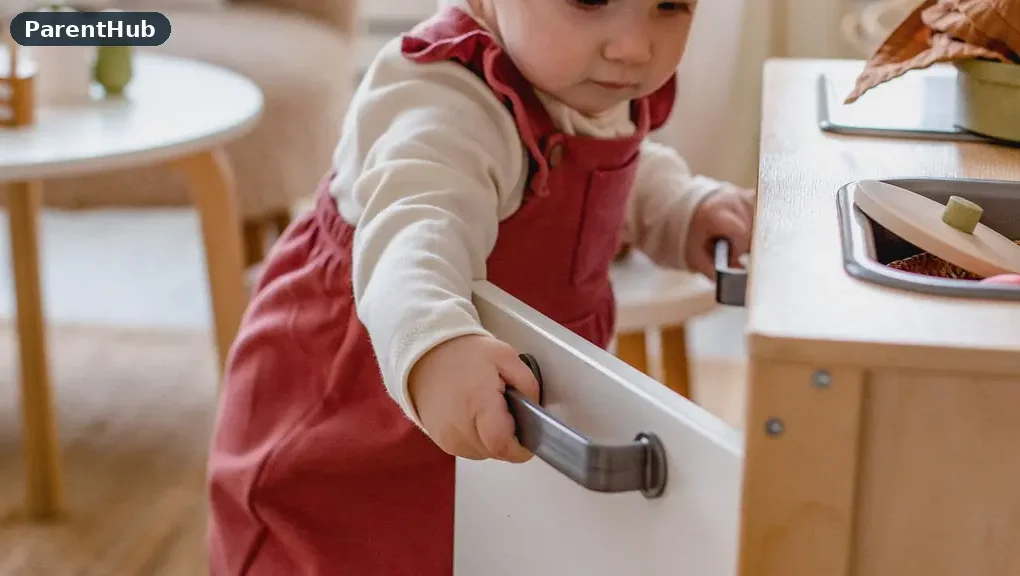
The kitchen holds more risks than any other room, so use gates to limit access when cooking. Fit locks or latches on cupboards that hold cleaning products, medicines, sharp tools, and plastic bags. Store cleaning products high up, never under the sink within reach. Keep knives, scissors, and other sharp items in a locked drawer or a high cupboard.
Turn pot handles inward on the stove, and use the back burners when possible, so a baby cannot reach up and pull a hot pot down. Keep hot drinks away from the edge of tables and counters, and never carry a baby while holding a hot drink. Secure the stove and oven with guards if the baby can reach the controls, and keep the dishwasher closed and latched.
- Lock cupboards holding cleaning products, medicines, and sharp tools.
- Turn pot handles inward and use back burners when cooking.
- Keep hot drinks away from table edges and never carry a baby with one.
- Use a safety gate to limit kitchen access during cooking.
- Store plastic bags and cling film out of reach.
Bathroom Proofing and Water Safety at Home
The bathroom needs care because water and medicines are close together. Never leave a baby alone in or near water, even for a moment, including in a bath seat or a shallow paddling pool. Empty buckets and baths after use, and keep the toilet lid closed with a latch if the baby can reach it. A baby can drown in a very small amount of water, so supervision is the most important rule.
Store medicines, vitamins, razors, and cleaning products in a locked cabinet, high up and out of reach. Use non slip mats in the bath and on the bathroom floor, and check the hot water temperature before any bath. A bath thermometer or a quick check with the inside of the wrist helps avoid scalds. Keep hairdryers and other electrical items unplugged and stored away from water.
Keep the bathroom door closed or fitted with a childproof handle cover when not in use. Small items such as cotton buds, hair ties, and jewellery should be stored in closed containers. For feeding safety that connects with kitchen and bathroom hygiene, the guide to cleaning baby bottles and toys safely covers washing and storage habits that fit alongside these checks.
Stairs Hallways and Whole Home Safety Habits
Stairs are a major risk once a baby can crawl or pull up. Fit safety gates at the top and bottom of every staircase, fixed to the wall rather than pressure fitted at the top. Check gates regularly for loose fittings, and teach older children to close them every time. Keep stairs clear of toys, shoes, and clutter that could cause a fall.
Walk through the whole home once a month and repeat the floor level check. Babies grow quickly, and a shelf that was out of reach last month may be within reach now. Keep a simple list of checks for each room, and fix small issues as soon as they are found. Knowing basic first aid is also valuable, and the guide to first aid basics every parent should know is a useful companion to the safety steps in this guide.
- Fit wall fixed gates at the top and bottom of stairs.
- Keep stairs and hallways clear of clutter and toys.
- Repeat a floor level safety check once a month.
- Keep emergency numbers saved and visible in the home.
- Teach everyone in the household to close gates and doors.
A Safer Home for Every Stage of Exploration
Baby proofing is not a one time task, but a habit that grows with the baby. Start before the baby moves, work room by room, and revisit each space as new skills appear. No home can be made risk free, and supervision remains the most important safety measure of all. With gates, locks, secure furniture, and a monthly check, the home becomes a safer place for a baby to explore, play, and learn. Share the checklist with grandparents, babysitters, and anyone else who cares for the baby, so the same safety habits are followed by everyone in the home.
When should I start baby proofing my home?
Start before the baby becomes mobile, usually around four to six months. Gates, locks, and furniture anchors should be in place before crawling begins. Revisit each room as the baby learns to pull up, climb, and walk.
What are the most important baby proofing steps?
Fit stair gates, anchor heavy furniture, lock away medicines and cleaning products, cover outlets, and keep small objects and cords out of reach. Never leave a baby alone near water, even for a moment.
Do I need safety gates at the bottom of stairs too?
Gates at both the top and bottom of stairs are recommended. The top gate prevents falls down the stairs, while the bottom gate stops a baby from climbing up. Use wall fixed gates at the top for the strongest fit.
How often should I check baby proofing in my home?
Do a floor level check once a month and after any change in the home, such as new furniture or a new stage of movement. Babies grow quickly, and a shelf that was safe last month may be within reach now.